Azeri Observer Editorial Staff
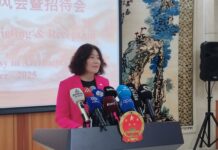
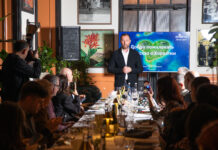
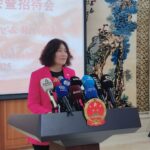
Belarusian Ambassador to Azerbaijan, Mr. Dmitry Pinevich, held an extended meeting with representatives of Azerbaijan’s leading media outlets. The event continued a tradition established by the Belarusian Embassy of holding in-depth discussions with journalists at the end of the year—a format the Embassy plans to institutionalize as an annual, pre-New Year gathering. He described the collective meeting with the leadership of more than twenty media organizations as a valuable informational and discussion platform aimed at further strengthening Belarus–Azerbaijan relations. Summing up the results of bilateral cooperation in 2025, the Ambassador outlined five key positive tracks that, in his words, reflect both the maturity and the future potential of the partnership between Minsk and Baku.
Political dialogue and mutual support
The first track highlighted the increased intensity of political interaction and the steadfast mutual support of Belarus and Azerbaijan on international platforms. According to Ambassador Pinevich, the outgoing year was marked by the further consolidation of strategic partnership despite growing global turbulence and fragmentation in international affairs. He underlined the personal role of Presidents Alexander Lukashenko and Ilham Aliyev, noting that their leadership has set a strong example of constructive engagement. The two leaders’ record includes 12 bilateral visits and numerous meetings on the margins of international forums. In 2025, Azerbaijan hosted high-level visits by Belarusian Prime Minister Aleksander Turchin and Chairperson of the Council of the Republic Natalia Kochanova, who also participated in an international conference marking the 30th anniversary of Azerbaijan’s Constitution. The Ambassador also emphasized the importance of inter-ministerial consultations, including talks between the foreign ministries on consular issues, which directly affect citizens of both countries. He thanked Azerbaijan for its consistent support of Belarus on international platforms, noting reciprocal backing by Minsk for Azerbaijan’s initiatives within UNESCO and the Non-Aligned Movement Parliamentary Network.
Industrial cooperation and economic ties
The second major track focused on expanding industrial cooperation as a core element of trade and economic relations. In October, Baku hosted the 15th meeting of the Belarus–Azerbaijan Intergovernmental Commission on Trade and Economic Cooperation, held for the first time in a two-day format and including a visit to Karabakh, where joint projects are being implemented. Ambassador Pinevich pointed to the long-standing cooperation at the Ganja Automobile Plant, where more than 14,000 Belarusian tractors have been assembled to date, alongside firefighting and rescue equipment. He also highlighted the production of 279 elevators by the Belarusian-Azerbaijani joint company Vertus and noted that additional projects are currently at various stages of implementation. Special attention was given to Azerbaijan’s rapidly developing pharmaceutical industry. Having visited several modern pharmaceutical plants, the Ambassador described their technological level as “extremely high” and stressed the strong potential for producing new medicines in cooperation with Belarusian partners, including for third-country markets such as the Eurasian Economic Union.

Humanitarian initiatives
The third track covered humanitarian cooperation, which, according to the Ambassador, is evolving from one-off initiatives to sustained interaction. More than 70 agreements are currently in force between universities in Belarus and Azerbaijan, with discussions underway on launching joint degree programs that would award diplomas from both countries. Youth and cultural exchanges are also gaining momentum. Ambassador Pinevich shared impressions from his participation in the “Ambassador’s Hour” at the Azerbaijan University of Languages and praised direct contacts established between Belarusian and Azerbaijani youth organizations. Belarus has also provided consultative support for Azerbaijan’s vocational education reform, particularly relevant in light of President Aliyev’s decision to open 21 new vocational schools by 2030. Healthcare cooperation is expanding as well, with transplantology, oncology and orthopedics identified as priority areas. In tourism, the Ambassador noted opportunities for complementarity, including in medical tourism, especially as Belarus prepares to launch a new National Tourism Agency in 2026.
Preserving historical memory
The fourth track emphasized the shared responsibility of preserving historical memory, particularly in 2025, which marks the 80th anniversary of the Victory in World War II. Azerbaijani scholars and journalists have actively contributed to commemorative initiatives in Belarus, while Minsk continues to honor the memory of Azerbaijani heroes who took part in liberating Belarus.
Strengthening media ties
Finally, Ambassador Pinevich highlighted the growing level of media interaction between the two countries, attributing it to both increased political activity and the high professional standards of journalists. He thanked Azerbaijani media representatives for fostering mutual interest and understanding. Concluding the meeting, the Ambassador presented the updated National Atlas of Belarus—a comprehensive scientific and cartographic publication—and announced the next session of the All-Belarusian People’s Assembly in Minsk. Wishing Azerbaijan a successful and peaceful New Year, he expressed confidence that expanding bilateral projects across regions and sectors would ensure that future generations inherit the same strong, brotherly relations enjoyed today.