By Elena Kosolapova
Azeri Observer Staff Writer
“The guest is equivalent to God” — a phrase that echoes an ancient Indian philosophical and cultural principle. Rooted deeply in Indian tradition, it is not merely a saying, but a way of life: a belief that hospitality is sacred, that sharing food is an act of devotion, and that every guest must be welcomed with warmth, generosity, and grace. It is this spirit that lies at the heart of Indian cuisine — a cuisine as vast, diverse, and layered as the civilization it represents.
It was this extraordinary culinary heritage that came alive in Baku, as the Embassy of India in Azerbaijan hosted a vibrant Indian Food Festival on its premises. For one day, the embassy transformed into a living canvas of India’s flavours, colours, and cultural expressions, welcoming an enthusiastic gathering of diplomats, Azerbaijani officials, members of parliament, business leaders, media representatives, and residents from across the international community.
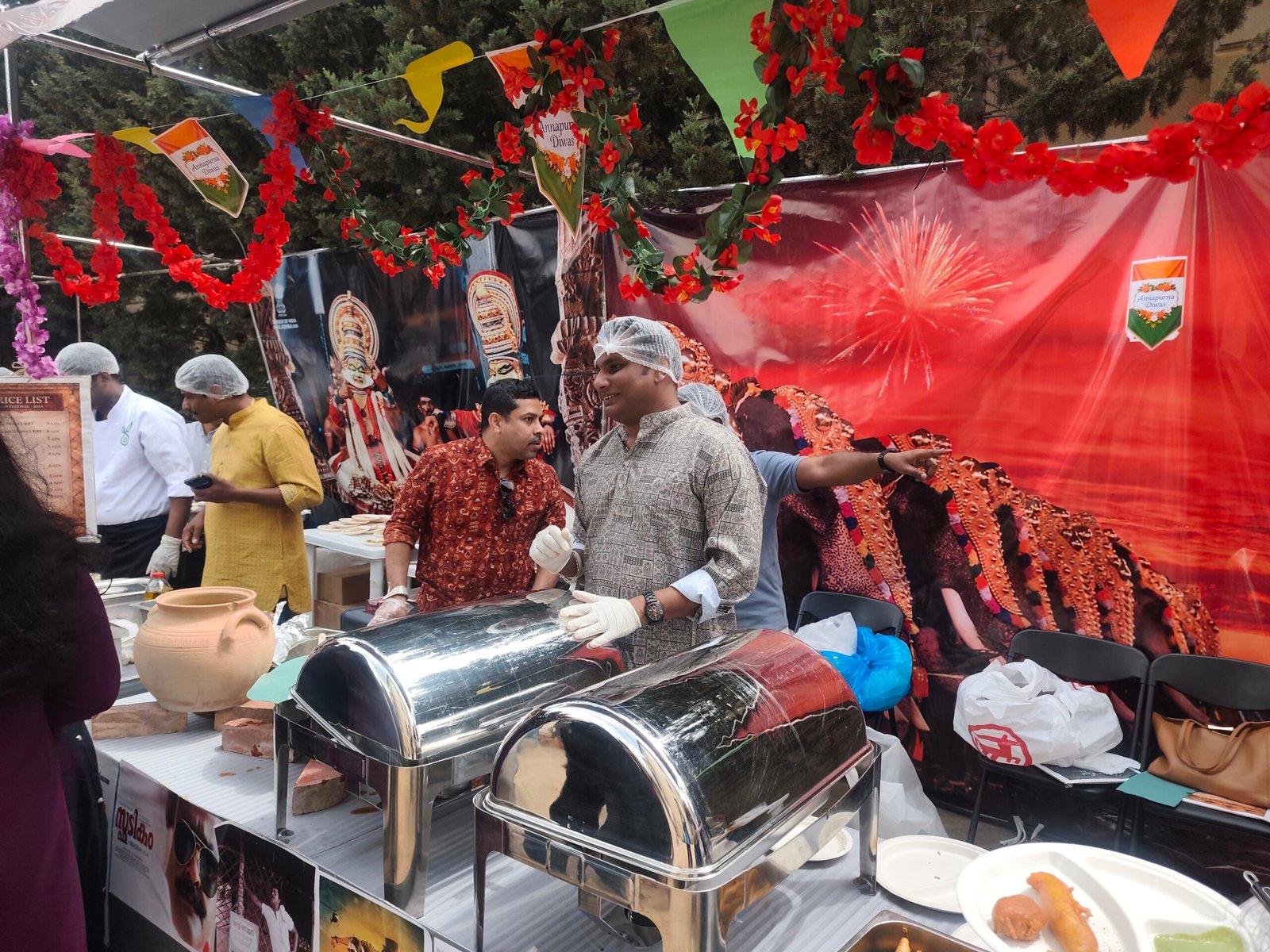
Indian cuisine is not a single narrative but a mosaic of histories, geographies, and traditions. Each region tells its own story through flavour. In the North, the cuisine carries the legacy of royal courts and centuries-old culinary refinement — fragrant biryanis slow-cooked with saffron, tender kebabs infused with aromatic spices, and soft, buttery naan fresh from the tandoor. In the South, the palate shifts to lighter, yet equally complex notes: crisp dosas, coconut-rich curries, tangy rasam, and dishes tempered with mustard seeds and curry leaves, reflecting the coastal abundance and tropical climate. The eastern regions offer a delicate balance of sweetness and spice, with mustard oil lending its signature sharpness to fish and vegetable dishes, while the West dazzles with bold, fiery flavours shaped by maritime trade and desert resilience alike. Across India, spices are not simply ingredients — they are an art form, carefully blended to create layers of taste that unfold with every bite. Food here is inseparable from wellness, tradition, and spirituality — a philosophy where nourishment extends beyond the body to the soul.
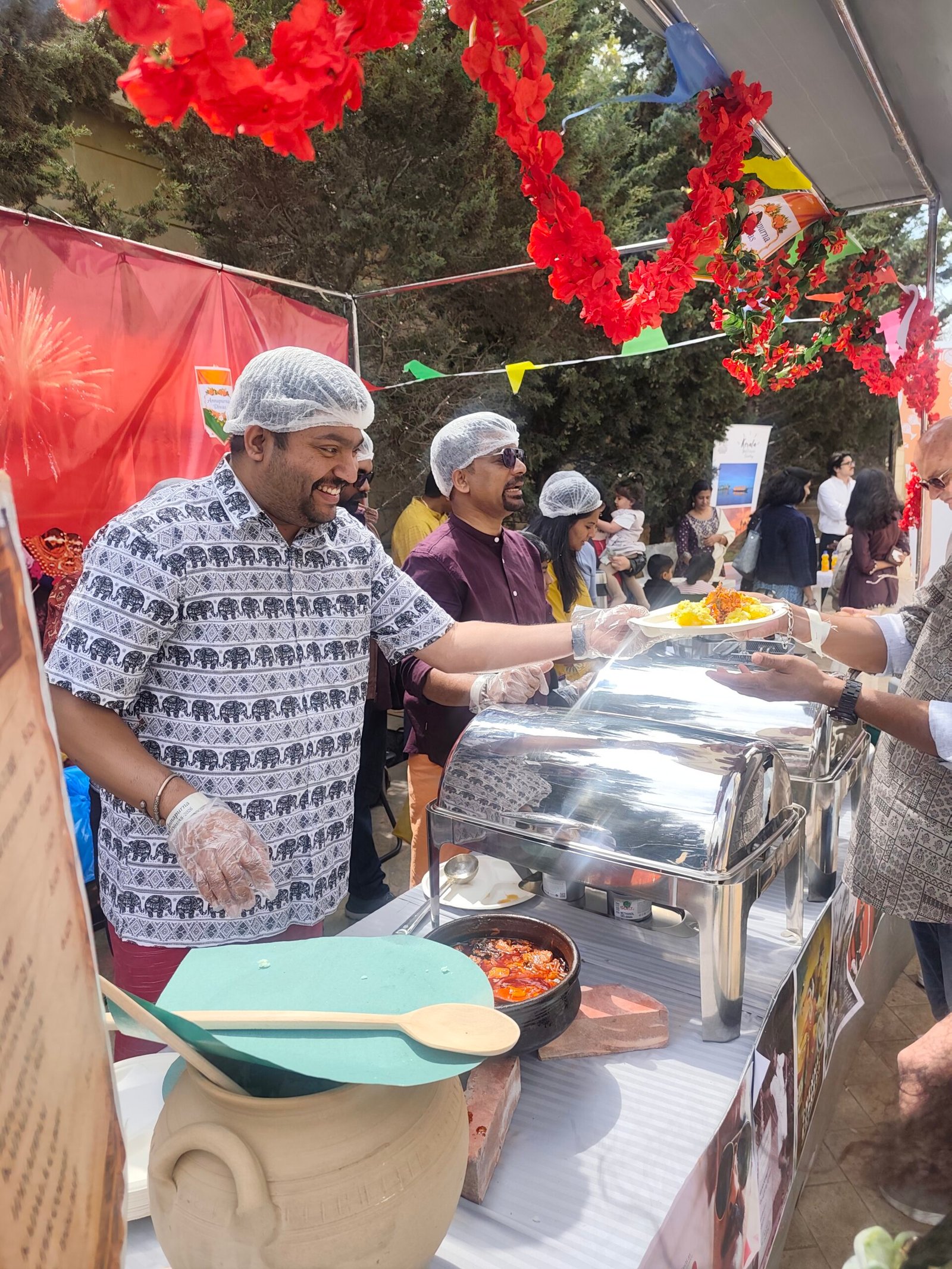
The festival in Baku brought this diversity vividly to life. Guests moved from stall to stall, experiencing the richness of Indian gastronomy — from the aromatic dishes of the North to the spice-laden delicacies of the South, from the subtle flavours of the East to the bold coastal tastes of the West. Each bite offered not just taste, but a glimpse into centuries of tradition and craftsmanship.
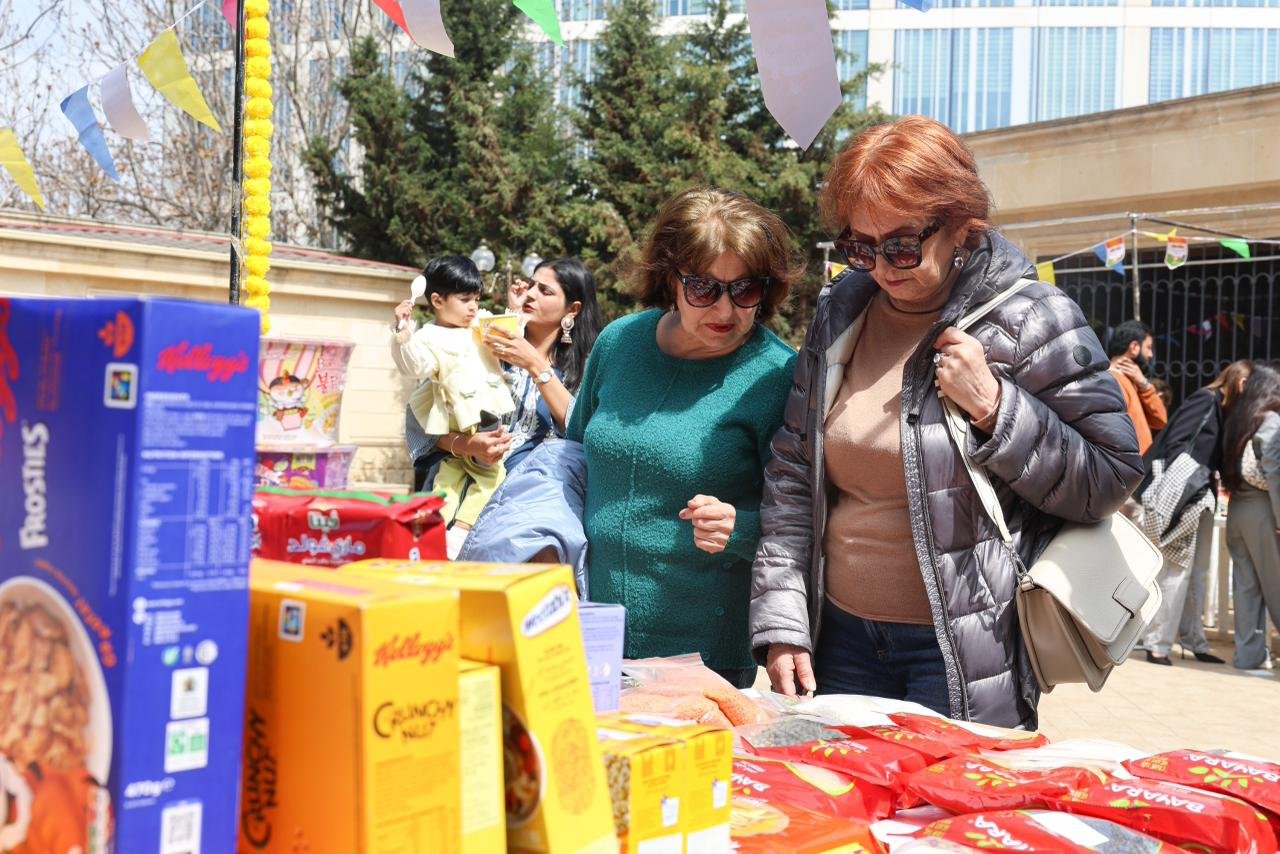
Beyond the cuisine, the festival celebrated India in its full cultural vibrancy. Exhibition counters displayed intricate handicrafts, traditional fabrics, and an array of spices — each item carrying the imprint of Indian artistry. The air was filled with music and movement, as folk dances brought rhythm to the stage, while fusion performances bridged tradition and modernity. Visitors adorned their hands with intricate henna designs at the Mehndi corner, participated in the cheerful game of Tambola, and joined yoga sessions that highlighted the deep connection between Indian food, balance, and holistic well-being.
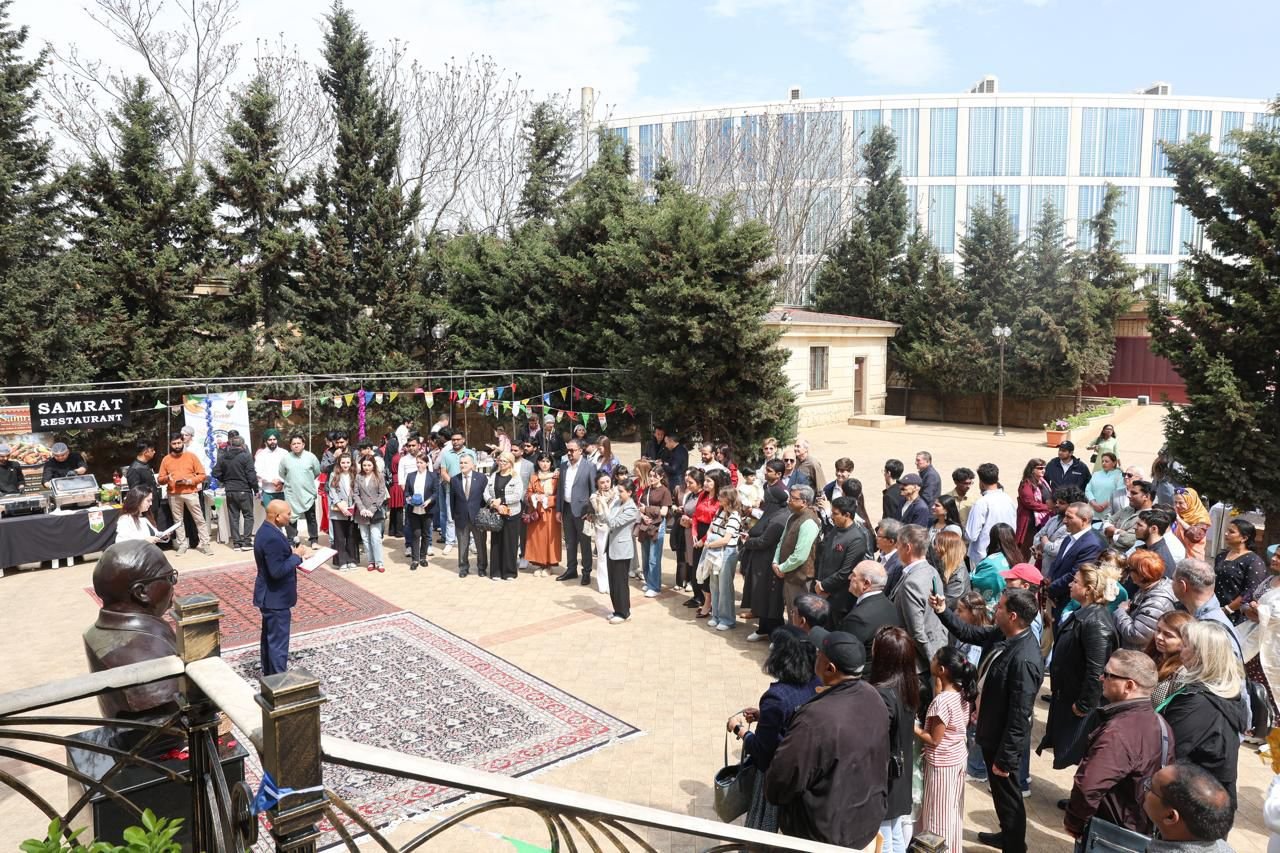
In his address, Ambassador of India to Azerbaijan, Mr. Abhay Kumar emphasized that food in India is far more than sustenance — it is an expression of love, care, and cultural identity. He noted that the festival was a tribute to hospitality itself, inviting guests to experience India not only through taste, but through its values. The Ambassador also highlighted a significant cultural milestone: for the first time, Annapurna Divas — a day dedicated to celebrating Indian cuisine globally — was being marked in Baku. Named after Annapurna, the goddess of nourishment, the occasion symbolized abundance, gratitude, and the sacredness of food. He further spoke about the initiative of the Indian Council for Cultural Relations to institutionalize the Annapurna Certificate, recognizing authentic Indian restaurants around the world — a step toward preserving culinary heritage on a global stage.
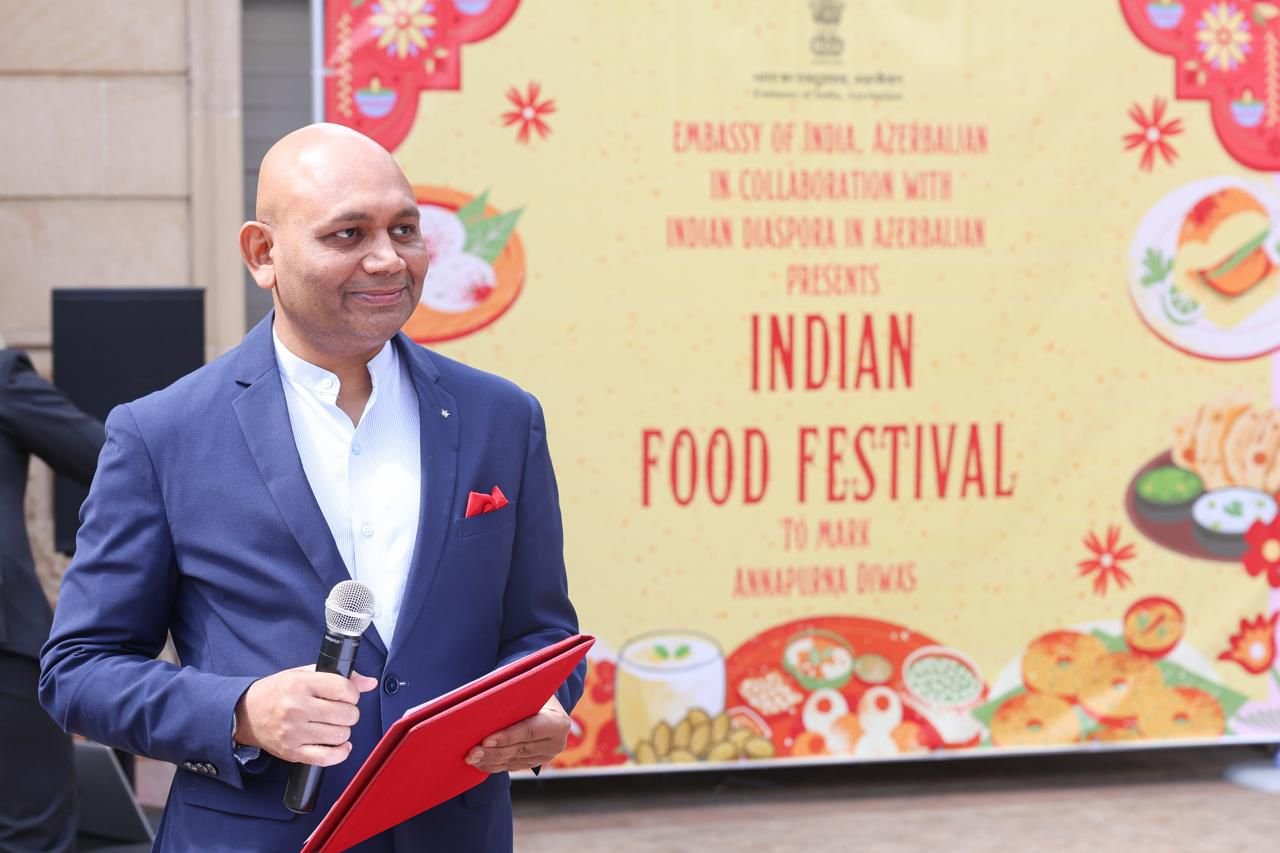
Importantly, the festival’s timing in April resonated with harvest celebrations across India and many other cultures — a season of renewal, gratitude, and shared joy. In this sense, the event was not just about food, but about connection: between people, traditions, and nations.
Ambassador Kumar also reflected on the broader cultural engagement between India and Azerbaijan, mentioning initiatives such as the Baku Evenings series and the Bharat Filmotsav, both of which have been warmly received by local audiences. The Indian Food Festival, he noted, was another meaningful step in strengthening these cultural bridges and deepening people-to-people ties.
As the day drew to a close, the festival concluded with heartfelt appreciation for the chefs and participating hotels who brought authenticity and passion to every dish. Guests departed not only with souvenirs and memories, but with a lingering sense of warmth — the unmistakable feeling of having been truly welcomed. Many guests described the event as a “taste of India in Baku,” but it was perhaps more than that. It was a celebration of hospitality as a universal language — one that transcends borders, cultures, and cuisines. In a world often defined by distance, the simple act of sharing food once again proved its power to bring people closer, reminding everyone present that, indeed, the guest is sacred.