By Aygun Jarchiyeva
Azeri Observer Staff Writer
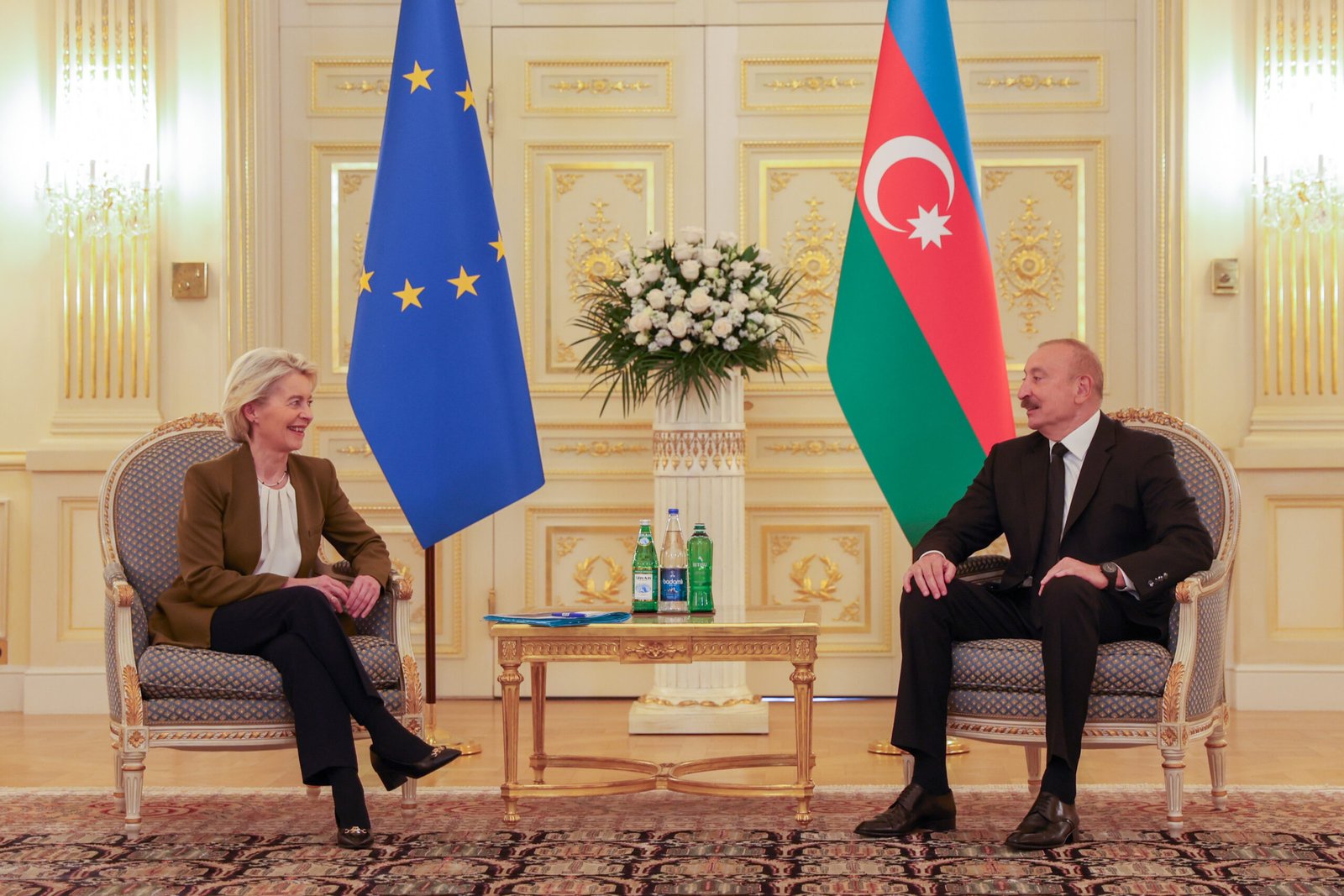
Diplomatic visits often serve as indicators of changing geopolitical realities rather than isolated political events. One notable example of this trend is the visit of European Commission President Ursula von der Leyen to Baku on July 1. While official statements emphasized economic cooperation, regional connectivity, and support for peace in the South Caucasus, the broader significance of the visit extends far beyond bilateral diplomacy. It reflected the European Union’s growing recognition that the geopolitical landscape of Eurasia is evolving and that Azerbaijan has emerged as an increasingly important actor in this transformation.
For Brussels, the visit represented an opportunity to reaffirm its strategic engagement with a country that has become increasingly important for Europe’s energy diversification, transport connectivity, and regional stability. For Azerbaijan, it marked another step in consolidating its position as a reliable international partner capable of maintaining constructive relations with diverse geopolitical centers while pursuing independent foreign policy.
The symbolism of the visit should not be underestimated. It came at a time when Europe continues to adapt to the long-term consequences of the war in Ukraine, global supply chains remain under pressure, and international actors are actively searching for alternative trade and energy routes connecting Europe with Asia. Against this backdrop, Azerbaijan occupies a geographical and political position of far greater strategic significance than a decade ago.
FROM PARTNERSHIP TO STRATEGIC DIALOGUE
Relations between Azerbaijan and the European Union have undergone a profound transformation over the past three decades. The Partnership and Cooperation Agreement of 1999 established the legal framework for political dialogue and economic cooperation. For many years, however, relations remained relatively limited in scope. Energy cooperation dominated the agenda, while broader strategic interaction developed gradually.
A major turning point came in the aftermath of Russia’s full-scale invasion of Ukraine in 2022, which fundamentally reshaped Europe’s energy security priorities. Europe’s urgent need to diversify its energy imports significantly increased Azerbaijan’s strategic importance. The Memorandum of Understanding on a Strategic Partnership in the Field of Energy, signed in July 2022, committed both sides to expanding supplies of Azerbaijani natural gas to European markets while deepening cooperation in renewable energy and methane emissions reduction.
Despite this, interpreting the relationship exclusively through the lens of hydrocarbons would be increasingly misleading. The European Union increasingly views Azerbaijan not only as a reliable supplier of natural gas but also as an important strategic partner positioned at the intersection of Europe’s energy security, transport connectivity, economic diversification, and broader engagement with the South Caucasus and Central Asia.
THE NEW LOGIC OF EUROPEAN ENGAGEMENT
European foreign policy has evolved considerably over the past several years. Strategic autonomy, economic resilience, and supply chain diversification have become central concepts shaping Brussels’ external relations. In this context, Azerbaijan’s regional importance is enhanced by its combination of developed transport infrastructure, significant energy resources, its active diplomatic profile, and its strategic geographic location.
Unlike many countries in the wider region, Azerbaijan has pursued a multi-vector foreign policy that enables simultaneous constructive dialogue with the European Union, Türkiye, Central Asian states, and other international partners. Rather than aligning itself exclusively with one geopolitical bloc, Baku has consistently emphasized pragmatic cooperation based on mutual interests. From a European perspective, this approach strengthens Azerbaijan’s role as a reliable partner for regional connectivity and economic cooperation.
BEYOND GAS: A COMPREHENSIVE PARTNERSHIP
Although energy security remains one of the key pillars of EU–Azerbaijan relations, discussions in Baku revealed that cooperation is becoming significantly more diversified. Integral components of the bilateral agenda have come to include transport infrastructure, digital connectivity, renewable energy, customs modernization, investment facilitation, education, innovation, and green technologies.
This diversification reflects a broader shift in the European Union’s strategic priorities. Energy security alone cannot guarantee long-term resilience. Modern geopolitical competition increasingly depends on infrastructure, logistics, digital connectivity, and technological cooperation. Countries that successfully integrate these sectors into regional cooperation frameworks are increasingly viewed as valuable strategic partners.
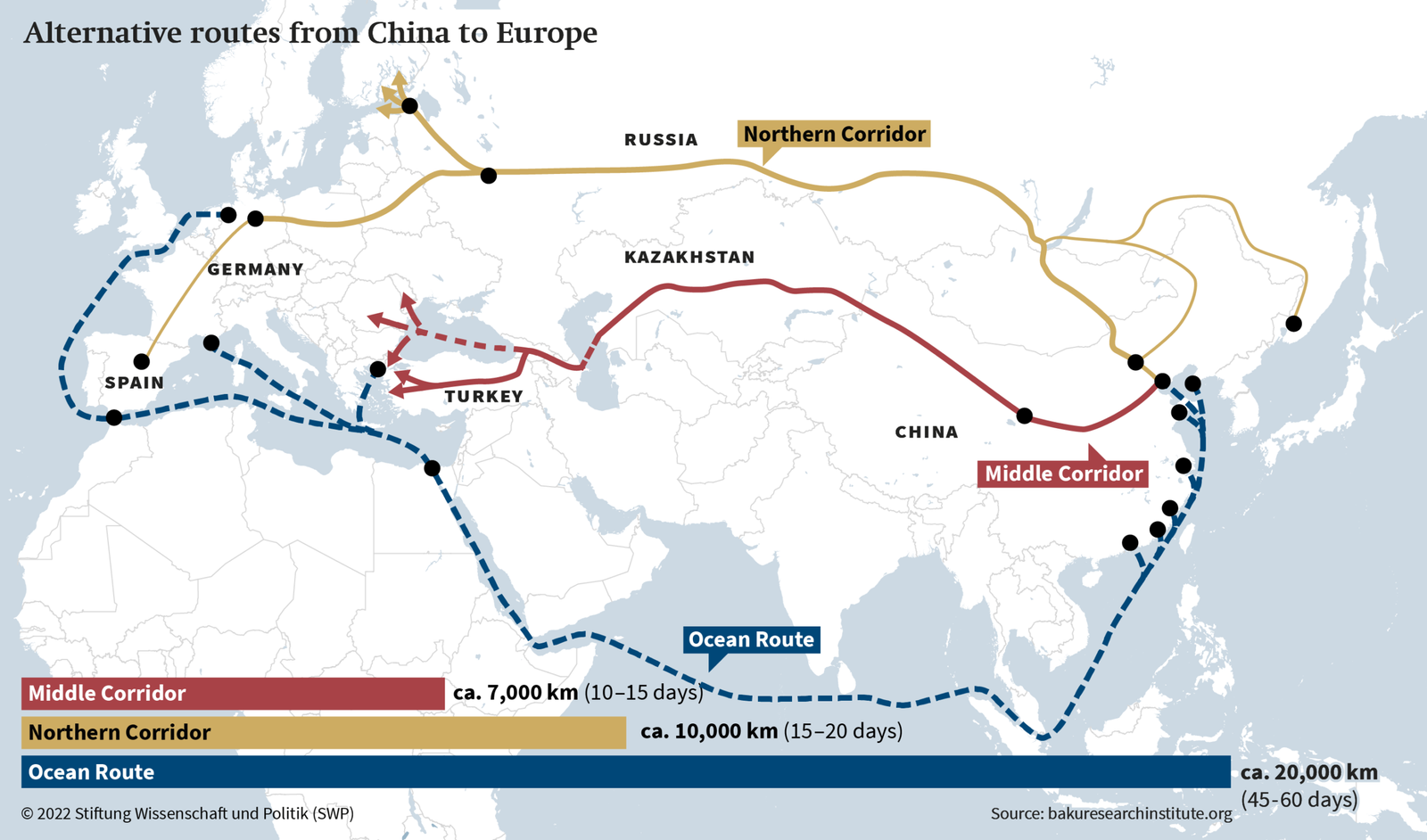
Azerbaijan appears well positioned to benefit from this evolving paradigm. Significant investments in transport infrastructure, the modernization of the Port of Baku, the expansion of railway networks, and growing volumes of cargo along the Middle Corridor have strengthened the country’s position as a regional transit hub connecting Europe with Central Asia and China.
THE GREEN TRANSITION: A NEW DIMENSION OF COOPERATION
The European Green Deal has reshaped the EU’s external energy policy, making renewable energy and sustainable infrastructure central to its long-term partnerships. This shift has also influenced relations with Azerbaijan.
While remaining a major natural gas supplier, Azerbaijan is expanding investments in solar and wind energy, particularly in the liberated territories and the Caspian offshore sector. For the EU, this growing renewable energy capacity offers an opportunity to complement existing gas supplies with future clean electricity imports.
A flagship initiative is the proposed Black Sea Submarine Electricity Cable, designed to export renewable electricity from Azerbaijan to the European Union via Georgia and Romania. The project will construct a high voltage direct current (HVDC) electric submarine cable, running 1,195 km, 1,100 km of which underwater. The cable would have a voltage level of 500 kV and a capacity of 1,000-1,500 MW. If implemented, the project could strengthen Azerbaijan’s role in Europe’s emerging green energy architecture.
As a result, EU–Azerbaijan energy cooperation is evolving beyond the traditional supplier–consumer relationship, with renewable energy and electricity connectivity becoming increasingly important alongside natural gas.
THE MIDDLE CORRIDOR: A GEOPOLITICAL OPPORTUNITY
Perhaps no issue better illustrates Azerbaijan’s growing geopolitical relevance than the development of the Trans-Caspian International Transport Route (known as the Middle Corridor). Recent geopolitical disruptions have exposed the vulnerabilities of traditional maritime and northern transit routes. As a result, the Middle Corridor – stretching from China through Kazakhstan, across the Caspian Sea, Azerbaijan, Georgia, and Türkiye toward Europe – has experienced unprecedented growth.
Azerbaijan occupies the central logistical position within this network. For Brussels, supporting these initiatives serves several strategic objectives: strengthening supply chain resilience, expanding economic engagement with Central Asia, and fostering regional interdependence.
The European Union’s Global Gateway initiative carries important strategic significance in this context. During her visit to Baku, Ursula von der Leyen announced that the EU would allocate up to €200 million in grants under Global Gateway to support transport, energy, and digital connectivity projects across the South Caucasus. According to the European Commission, this funding could leverage up to €2 billion in public and private investment.
Several projects are worthy of highlighting, including the expansion of the Port of Baku and the creation of a railway connection through Nakhchivan. Beyond financial backing, the European Commission proposed launching an EU–Azerbaijan Connectivity Partnership, establishing a structured long-term framework across core transport and digital networks.
INVESTMENT CLIMATE AND MULTI-VECTOR DIPLOMACY
One of the most important outcomes of the European Commission President’s July visit is the strong signal it sends to international investors. High-level political engagement reinforces investor confidence and enhances Azerbaijan’s profile as an attractive destination for capital. This aligns directly with Baku’s national strategy to reduce reliance on hydrocarbon revenues by fostering growth in logistics, manufacturing, digital technology, and education.
Equally vital is the defining feature of Azerbaijan’s foreign policy: its commitment to maintaining balanced, multi-vector relations. As Azerbaijan deepens ties with the EU, it is also developing strategic partnerships with Türkiye, strengthening integration within Central Asia and the Organization of Turkic States, and engaging in pragmatic interaction with other regional actors. Rather than viewing these vectors as mutually exclusive, Azerbaijan acts as a bridge connecting distinct geopolitical and economic spaces.
LOOKING TOWARD 2030
Ursula von der Leyen’s visit demonstrated that the European Union regards Azerbaijan not merely as a hydrocarbon supplier but as an indispensable strategic partner at the crossroads of Eurasian connectivity, green transition, and regional stability.
Additionally, the announcement of a new €20 million EU program supporting peacebuilding, demining, healthcare, and local community development underscores that economic connectivity is being matched by commitments to regional human security. As current initiatives transition from political declarations into operational projects, EU–Azerbaijan relations are entering their most substantive and comprehensive phase to date.
Clarification: An incorrect map related to the Middle Corridor was inadvertently included in the print edition of Azeri Observer, Issue No. 51 (2026), in an article on EU–Azerbaijan relations.